
BANDA PEELA BLOODLINE OF NELLORE
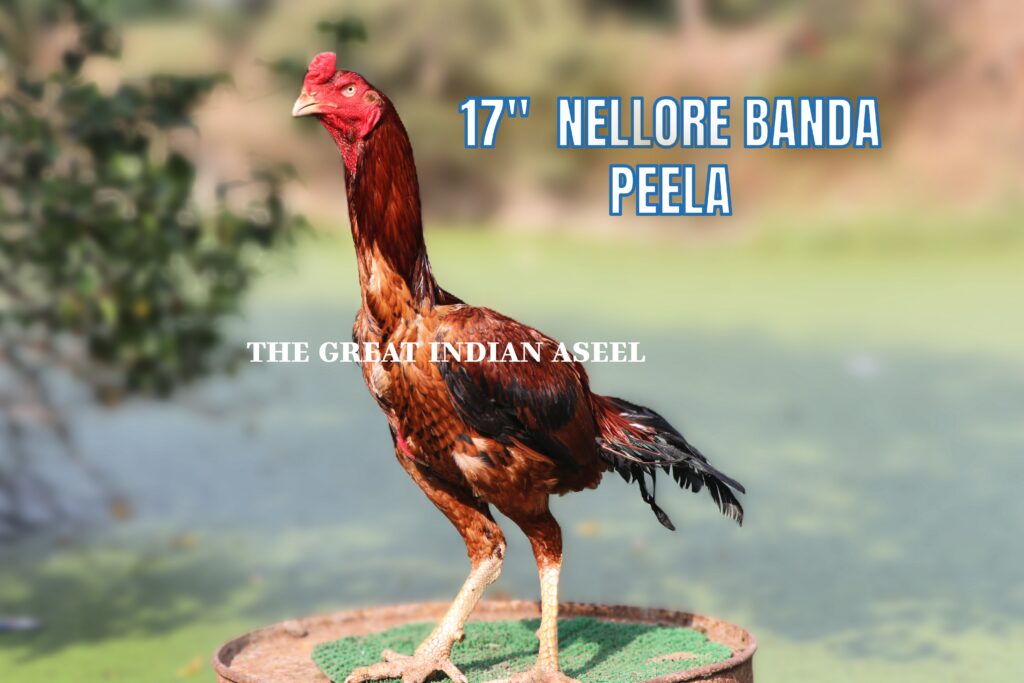
Another classic and legendary bloodline that we are proudly using for breeding purposes holds a very special place in our journey. When we made the decision to focus seriously on large-size Aseel breeding, we understood that this path would demand patience, sacrifice, and long-term commitment. We carefully shortlisted only a few top-quality bloodlines from across India that truly represented size, character, and purity. We were fortunate to successfully acquire some of them, while the search for others still continues. Our hunt will go on, because in true breeding there is no final destination — never say never.
Banda Peela was one such bloodline that attracted my attention from the very beginning. Its reputation for strength, balance, and classic character is well known, yet acquiring good birds from this line is extremely difficult. Breeders who genuinely understand the value of pure Aseels do not easily part with their best stock, and even with effort and resources, access to such birds is never guaranteed.
In this journey, we received invaluable support from our dear friend J. Mohan Raj from Kurnool, Andhra Pradesh. Mohan has been working relentlessly for many years to develop and preserve South India’s most precious asset — classic Aseels. This particular bird was bred at his place with deep understanding, careful selection, and respect for old blood. The father of this bird is a flat-comb Peela, large-size Aseel from the Nellore Banda Peela line, making this bloodline even more significant and difficult to replace.
Mohan strongly supported our shared vision to encourage and guide large-size Aseel breeders, so that more fanciers recognize the importance of these giants and actively work toward their preservation. Our intention has never been mass production, but meaningful breeding that protects structure, temperament, and genetic strength.
Large-size Aseels are not merely birds; they are a living treasure of the Indian Aseel field and poultry heritage. This mission goes beyond personal breeding goals — it is about responsibility. It is about safeguarding bloodlines that belong not just to India, but to the world. South India has always been the natural habitat of these majestic birds, yet today we are witnessing their rapid decline within a very short time.
This is perhaps our last real opportunity to save these classic Aseels. By promoting them among serious fanciers, sharing correct knowledge, and encouraging disciplined breeding practices, we hope to ensure that these legendary bloodlines do not disappear. What we preserve today will define what future generations are able to see, study, and continue.